Difference between revisions of "THQ"
| (41 intermediate revisions by 2 users not shown) | |||
| Line 1: | Line 1: | ||
| − | + | {{Infobox/Company|boxcolor=#e30000 | |
| − | {{Infobox/Company | + | |name = THQ |
| − | |name=THQ | + | |image = <tabber> |
| − | |image=[[File:THQ_2011_Logo.png|center| | + | |-|Final = [[File:THQ_2011_Logo.png|center|200px]]<br>Used until 2013 |
| − | |headquarters=Agoura Hills, California, U.S. | + | |-|Former = [[File:THQ_logo_2000.png|center|275px]]<br>Used until 2011 |
| − | |founded= | + | |-|PlayTHQ = [[File:PlayTHQLogo.png|center|200px]]<br>The PlayTHQ Logo, used for casual and family titles from 2007 - 2009 |
| − | |type= | + | </tabber> |
| − | |site=[http://www.thq.com/ | + | |headquarters = Agoura Hills, California, U.S. 🇺🇸 |
| − | |current= | + | |founded = April 1990 |
| + | |type = Toy Manufacturer<br>Video Game Publisher | ||
| + | |games = {{Icon|DTL}}<br>{{Icon|DTLSB}}<br>{{Icon|TNC}}<br>{{Icon|Wii}}<br>[[Action Draw Jumper]]<br>{{Icon|Collection}} | ||
| + | |site = [http://www.thq.com/ THQ Nordic's website] | ||
| + | |current = Closed | ||
}} | }} | ||
| − | |||
| − | |||
| − | + | '''THQ''' was an American video game publisher and owner of a number of development subsidiaries. They were well-known for publishing a large variety of titles, from original IPs such as ''[[:wikipedia:Destroy All Humans|Destroy All Humans]]'', ''[[:wikipedia:Saints Row|Saints Row]]'' and ''[[:wikipedia:Darksiders|Darksiders]]'' to a large number of licensed games, most notably from [[:wikipedia:WWE|WWE]], [[:wikipedia:Pixar|Pixar]] and [[Nickelodeon]]. They were also the studio who originally picked up the [[Drawn to Life Series]], publishing ''[[Drawn to Life]]'', ''[[Drawn to Life: The Next Chapter]]'', ''[[Drawn to Life: The Next Chapter (Wii)]]'', and ''[[Drawn to Life Collection]]''. A subsidiary of THQ, '''PlayTHQ''', also published the [[Altron]]-developed ''[[Drawn to Life: Spongebob Squarepants Edition]]''. | |
| − | =={{Icon| | + | |
| − | + | =={{Icon|Book}} History== | |
| − | | | + | THQ was founded in April 1990 as a toy manufacturer named '''Toy Headquarters''' by [[Wikipedia:Jack Friedman|Jack Friedman]] (1939 - 2010), a veteran in said industry who also founded [[:wikipedia:LJN|LJN]] in 1967 and [[:wikipedia:Jakks Pacific|Jakks Pacific]] in 1995. Both LJN and THQ would venture into video game development and publishing, with the latter beginning to do so in 1991 with ''[[:wikipedia:Peter Pan and the Pirates (video game)|Fox's Peter Pan & The Pirates: The Revenge of Captain Hook]]''. The company would build their long-standing partnership with Nickelodeon early on in their lifetime, releasing ''The Ren & Stimpy Show: Space Cadet Adventures'' the following year. |
| − | | | + | |
| − | | | + | Upon withdrawing from the toy manufacturer market entirely in 1994, THQ would expand not only in game production, but in studio output through acquisitions of developers such as [[:wikipedia:Heavy Iron Studios|Heavy Iron Studios]] in 1999 and [[:wikipedia:Volition|Volition]] in 2000. The introduction of acclaimed original titles such as ''[[:wikipedia:Red Faction|Red Faction]]'', ''[[:wikipedia:Saints Row (2006 video game)|Saints Row]]'', ''[[:wikipedia:Destroy All Humans! (video game)|Destroy All Humans!]]'' and ''[[:wikipedia:MotoGP: Ultimate Racing Technology|MotoGP: Ultimate Racing Technology]]'' and their extended publishing agreement with Nickelodeon - as well as deals made with companies such as Pixar, the WWE and [[:wikipedia:MGA Entertainment|MGA Entertainment]] - would grow THQ into even further heights across the 2000s. |
| − | + | ||
| − | + | ===Development of Drawn to Life=== | |
| − | + | After publishing [[5th Cell|5th Cell's]] early mobile titles, THQ was pitched an original title for the [[Nintendo DS]], one that allowed the player to draw items into the game world. THQ agreed to publish the title, and development on [[Drawn to Life]] began in early 2006. | |
| − | + | ||
| − | + | There were a number of issues both THQ and 5th Cell faced throughout development, ranging from development crunch time to the art conversion process proving difficult. One major issue in particular was in relation to the game's cartridge size; according to Jeremiah Slaczka, THQ opted to pay for a cheaper, smaller cartridge than what the final game had for the team to import it to, which resulted in drawings not being saved upon completion.<ref>[https://www.youtube.com/watch?v=EoxNnnrowm4&t=2897s The Drawn to Life Fanbase Interviews Jeremiah Slaczka, 1:00:54]</ref> A THQ executive would help the team oppose this, however, convincing THQ to allow for a bigger cartridge size to keep the drawing saving intact. | |
| − | + | ||
| − | + | Drawn to Life took roughly 17 months to finish before it's release, with six of those months being spent in the homebrew stages. THQ would release the game on September 10th, 2007, with [[Agatsuma Entertainment]] reaching an agreement to localize the game in Japan the following year. | |
| − | + | ||
| − | + | ===Development of Drawn to Life: SpongeBob SquarePants Edition=== | |
| − | + | After Drawn to Life proved to be a critical and commercial success, THQ was interested in continuing development of the franchise. Upon meeting with Nickelodeon, they got the idea to have 5th Cell develop a crossover title with [[:wikipedia:SpongeBob SquarePants|SpongeBob SquarePants]], as aspects of the season 2 episode "Frankendoodle" bears similarities to the game. 5th Cell refused to work on it, instead deciding to pitch and develop [[:wikipedia:Lock's Quest|Lock's Quest]]; as a result, THQ brought over the Japanese developer [[Altron]] to make the title, as they had seen success themselves with the previous SpongeBob DS title, [[:wikipedia:SpongeBob's Atlantis SquarePantis|Atlantis SquarePantis]]. The game would see release on September 15th, 2008, going on to become the best-selling entry in the series. | |
| − | + | ||
| − | + | Not much is known about the game's development beyond this; much like Drawn to Life, there were a number of unused assets, although all of these were found within the game files and not developer packages or reveals. One major exclusion are for the Versus Mode, such as as portraits and music, suggesting a character selection screen for said mode was considered at one point. The game would also reuse multiple assets from Atlantis SquarePantis, which would also carry over to assets from both games being reused in the next SpongeBob DS title, [[:wikipedia:SpongeBob's Truth or Square (video game)|Truth or Square]]. The Spanish version of Drawn to Life: SpongeBob SquarePants Edition would also reuse the DS Menu icon from that game and have a variant of the in-game logo using the 2009 Nickelodeon logo, suggesting that version released later than the others. | |
| − | + | ||
| − | + | ===Development of Drawn to Life: The Next Chapter=== | |
| − | + | Development for [[Drawn to Life: The Next Chapter]] began in 2008, shortly after the release of Lock's Quest. 5th Cell aimed to be more ambitious with this title, improving almost every aspect of the original game. THQ was more open to their ideas this time round, resulting in a change in gameplay direction and tone compared to the first game. It's development cycle was not free of issues, however; it was also affected by crunch time, resulting in a portion of the game being rushed and a fair amount of content being left out of the final release, including an entire section of [[Lavasteam]] and an additional wind-based village. Being developed in tandem with another 5th Cell title, [[:wikipedia:Scribblenauts (video game)|Scribblenauts]], as well as a separate Wii entry in the ''Drawn to Life'' series, further complicated development. | |
| − | + | ||
| − | + | ===Development of Drawn to Life: The Next Chapter (Wii)=== | |
| − | + | Said Wii version was also rejected by 5th Cell, as Jeremiah Slaczka thought the system wouldn't allow for them to make it at a good scale.<ref>[https://www.gamedeveloper.com/design/fountain-of-scribbles-5th-cell-s-jeremiah-slaczka-speaks Fountain of Scribbles: 5th Cell's Jeremiah Slaczka Speaks, GameSpot]</ref> After this meeting, THQ contracted [[Planet Moon Studios]] to develop the title, and the developer would split production to their B-team while working on another game, the cancelled title My Amazing Story. Due to the smaller size of the team and production times being brutal, however, this game would suffer the most crunch out of all the Drawn to Life games published by THQ. | |
| − | + | ||
| − | + | {{Quote|text=DTL was supposed to be a simple "safety" production that allowed other studio creative leads to focus on a big 1st-party project for Microsoft Game Studio. When the MGS project wound down and we put eyes back on DTL, we saw that the product was a shockingly scattered mess, barely playable/ parts on the floor, nowhere near being able to produce the expected alpha/ beta/ gold dates - it became an all-hands-on-deck emergency...My senior Art Lead and UI Art Director came into it with me, sleeves rolled up, to focus on lining up each area of the game (characters/ props/ cinematics, levels, user interface/ drawing tool). It was only as we were in the midst of alpha that I was able to offer visual feedback to help pull it all together with polish (TBH most of the individual assets developed by the team looked great, really cute and clean).|character=Ken Capelli}} | |
| − | + | ||
| − | + | THQ was insistent on both versions of The Next Chapter releasing alongside each other, and so Planet Moon Studios put all their focus on the game. They would eventually finish the game in time, despite all the development issues. Both versions would be announced on the same day - May 26th, 2009 - and release October 8th, 2009. While the Wii game became the second best-selling entry in the series, the DS version was better received by critics. The ending of the DS version, however, would draw ire from parents and the [[:wikipedia:ESRB|ESRB]]. | |
| − | + | ||
| − | + | A promotional flash game, titled [[Action Draw Jumper]], would release for the Australian website for both versions around the time of the games' release. | |
| − | + | ||
| − | + | ===Development of Drawn to Life Collection=== | |
| − | + | A number of parents complained to the ESRB about the nature of Drawn to Life: the Next Chapter's canon ending - depicting [[Mike]] waking up from a coma he was under and he, [[Heather]] and their parents getting into a car crash - demanding they re-rate the game with a higher age rating. The ESRB informed THQ about this, and the latter took action at once. A collection of the DS Drawn to Life entries was made, with the main change being the ending of The Next Chapter, which now depicts Mike falling from a tree. 5th Cell would not be involved with developing this collection, meaning it was entirely developed internally by THQ. The collection would see release on November 3rd, 2010 exclusively in the US and Australia, and the altered ending would make it's way into later prints of the game in the US. This ending has since been declared non-canon. | |
| − | + | ||
| − | + | ===Development and failure of the uDraw GameTablet=== | |
| − | + | {{UnusedImage|image=[[File:uDrawBoothe3.jpg|200px]]|caption=The uDraw exhibit at E3 2011}} | |
| − | + | ||
| − | + | After the mixed reception towards [[Drawn to Life: The Next Chapter (Wii)]], THQ noticed a large point of criticism was towards it's Draw Mode controls, which used the Wiimote's IR pointer instead of a stylus like the DS games. After some pitches for failed licensed Drawn to Life games in the vein of the SpongeBob SquarePants Edition fell through - such as tie-ins with Marvel, Pixar, Star Wars and even [[:wikipedia:Conan (2007 video game)|THQ's own take on Conan the Barbarian]] - the idea came to develop a drawing tablet accessory to mitigate the control issue for potential future entries in the series, named the Drawn to Life Pal.<ref>[https://www.linkedin.com/feed/update/urn:li:activity:6777678150928359424/ Scott Rogers, Linkedin]</ref> Eventually, however, the Drawn to Life branding was abandoned in favor of making the tablet it's own entity, now named the uDraw. | |
| − | + | ||
| − | + | The tablet released for the Wii on November 14th, 2010, and became a surprise commercial success. THQ wasn't doing as well at the time, so this success inspired them to go all out on development for uDraw games. A considerable amount of titles were developed for it, including an original title, [[:wikipedia:Dood's Big Adventure|Dood's Big Adventure]], and a SpongeBob SquarePants-themed [[:wikipedia:WarioWare|WarioWare]] clone, SpongeBob SquigglePants. THQ became overconfident over the success, however, as they would then release it for the [[:wikipedia:PlayStation 3|PlayStation 3]] and [[:wikipedia:Xbox 360|Xbox 360]] consoles in 2011, as well as an upgraded version of the Wii's tablet. This proved to be a fatal error, as this release resulted in 1.4 million unsold units and a $100 million total loss.<ref>[https://www.eurogamer.net/thq-details-full-extent-of-udraw-disaster THQ's uDraw Disaster, Eurogamer]</ref> | |
| − | + | ||
| − | + | ===THQ's Closure and Auctions=== | |
| − | + | In 2012, due to declining sales, various game cancellations and the failure of the uDraw, THQ declared Chapter 11 bankruptcy. They held two auctions to sell off their remaining assets, such as: | |
| − | + | ||
| − | + | * Subsidiaries such as Relic Entertainment (sold to SEGA) and Volition (sold to Koch Media) | |
| − | + | * Intellectual properties such as Homeworld (acquired by Gearbox Software) and Freespace (taken by the series' previous publisher Interplay Entertainment) | |
| − | + | * Games yet to be published such as South Park: The Stick of Truth (picked up by Ubisoft) and Devil's Third (reverted to Valhalla Game Studios and published by Nintendo) | |
| − | + | ||
| − | + | The Drawn to Life Series was sold to [[505 Games]] during the second auction in April 2013 for $301,000, which included all rights to the series except for SpongeBob SquarePants Edition, which Nickelodeon retained.<ref>[https://www.polygon.com/2013/4/22/4254116/drawn-to-life-series-acquired-by-505-games-second-thq-auction/ Drawn to Life series acquired bt 505 Games, Polygon]</ref> Almost all their remaining IPs have been acquired by the Austrian studio Nordic Games, who later acquired the THQ name itself and renamed themselves to THQ Nordic. While THQ Nordic was able to revive some of THQ's old series and even acquire more of them, the Drawn to Life series was not among them, as 505 Games still owns the rights. | |
| − | + | ||
| − | + | =={{Icon|Button}} Notable Games== | |
| − | + | * [[:wikipedia:Peter Pan and the Pirates (video game)|Fox's Peter Pan & The Pirates: The Revenge of Captain Hook]] (1991) - ''First Release'' | |
| − | + | * The Ren & Stimpy Show: Space Cadet Adventures (1992) - ''First Nickelodeon game'' | |
| − | + | * [[:wikipedia:Quest 64|Quest 64]] (1998) | |
| − | + | * [[:wikipedia:Earthworm Jim (video game)|Earthworm Jim Advance]] (2001) | |
| − | + | * [[:wikipedia:Red Faction|Red Faction]] (2001) | |
| − | + | * [[:wikipedia:Conker's Bad Fur Day|Conker's Bad Fur Day]] (2001) | |
| − | + | * [[:wikipedia:SpongeBob SquarePants: Battle for Bikini Bottom|SpongeBob SquarePants: Battle for Bikini Bottom]] (2003) | |
| − | + | * [[:wikipedia:Tak and the Power of Juju|Tak and the Power of Juju]] (2003) | |
| − | + | * [[:wikipedia:MotoGP: Ultimate Racing Technology|MotoGP: Ultimate Racing Technology]] (2003) | |
| − | + | * [[:wikipedia:WWE SmackDown! Here Comes the Pain|WWE SmackDown! Here Comes the Pain]] (2003) | |
| − | + | * [https://web.archive.org/web/20080915045736/http://www.5thcell.com/games.php?menu=0&game=mpoccha Mini Poccha] (2004) | |
| − | + | * [https://web.archive.org/web/20080915045800/http://www.5thcell.com/games.php?menu=0&game=st6 Seal Team 6] (2004) | |
| − | + | * [[:wikipedia:Destroy All Humans! (2005 video game)|Destroy All Humans!]] (2005) | |
| − | + | * [[:wikipedia:Saints Row (2006 video game)|Saints Row]] (2006) | |
| − | |||
| − | |||
| − | |||
| − | |||
| − | |||
| − | |||
| − | |||
| − | |||
| − | |||
| − | |||
| − | |||
| − | |||
| − | |||
| − | |||
| − | |||
| − | |||
| − | |||
| − | |||
| − | |||
| − | |||
| − | |||
| − | |||
| − | |||
| − | |||
| − | |||
| − | |||
| − | |||
| − | |||
| − | |||
| − | |||
| − | |||
| − | |||
| − | |||
| − | |||
| − | |||
| − | |||
| − | |||
| − | |||
| − | |||
| − | |||
| − | |||
| − | |||
| − | |||
| − | |||
| − | |||
| − | |||
| − | |||
| − | |||
| − | |||
| − | |||
| − | |||
| − | |||
| − | |||
| − | |||
| − | |||
| − | * | ||
| − | |||
| − | * | ||
| − | |||
| − | * | ||
| − | |||
| − | |||
| − | |||
| − | |||
| − | |||
| − | |||
| − | |||
| − | |||
| − | |||
| − | |||
| − | |||
| − | |||
| − | |||
| − | |||
| − | |||
| − | * | ||
| − | |||
| − | * | ||
| − | |||
| − | |||
| − | * | ||
| − | * | ||
| − | |||
| − | * | ||
| − | * | ||
| − | |||
| − | |||
| − | |||
| − | |||
| − | |||
| − | * | ||
| − | |||
| − | |||
| − | * | ||
| − | * | ||
| − | |||
| − | |||
| − | |||
| − | * | ||
| − | |||
| − | * | ||
| − | * | ||
| − | |||
| − | * | ||
| − | |||
| − | * | ||
| − | |||
| − | |||
| − | |||
* [[Drawn to Life]] (2007) | * [[Drawn to Life]] (2007) | ||
| − | * | + | * [[:wikipedia:Conan (2007 video game)|Conan]] (2007) |
| − | + | * [[:wikipedia:SpongeBob's Atlantis SquarePantis (video game)|SpongeBob's Atlantis SquarePantis]] (2007) | |
| − | |||
| − | |||
| − | * | ||
| − | |||
| − | |||
| − | |||
| − | |||
| − | |||
| − | |||
| − | |||
| − | |||
| − | |||
| − | |||
| − | |||
| − | |||
| − | |||
| − | |||
| − | |||
| − | |||
| − | |||
| − | |||
| − | |||
| − | |||
| − | |||
| − | |||
* [[Drawn to Life: Spongebob Squarepants Edition]] (2008) | * [[Drawn to Life: Spongebob Squarepants Edition]] (2008) | ||
| − | * | + | * [http://locksquest.wikia.com/wiki/Lock%27s_Quest_Wiki Lock's Quest] (2008) |
| − | + | * [[Drawn to Life: The Next Chapter]] (2009) | |
| − | |||
| − | |||
| − | |||
| − | |||
| − | |||
| − | |||
| − | |||
| − | |||
| − | |||
| − | |||
| − | |||
| − | |||
| − | |||
| − | |||
| − | |||
| − | * [[Drawn to Life: The Next Chapter | ||
* [[Drawn to Life: The Next Chapter (Wii)]] (2009) | * [[Drawn to Life: The Next Chapter (Wii)]] (2009) | ||
| − | * | + | ** [[Action Draw Jumper]] (2009) |
| − | * | + | * [[:wikipedia:SpongeBob's Truth or Square (video game)|SpongeBob's Truth or Square]] (2009) |
| − | + | * [[Drawn to Life Collection]] (2010) | |
| − | + | * [[:wikipedia:UDraw Studio|uDraw Studio]] (2010) | |
| − | + | * [[:wikipedia:Darksiders (video game)|Darksiders]] (2010) | |
| − | + | * [[:wikipedia:Dood's Big Adventure|Dood's Big Adventure]] (2010) | |
| − | * | + | * [[:wikipedia:SpongeBob SquigglePants|SpongeBob SquigglePants]] (2011) |
| − | * | + | * [[:wikipedia:SpongeBob's Surf & Skate Roadtrip|SpongeBob's Surf & Skate Roadtrip]] (2011) - ''Final Nickelodeon Game'' |
| − | + | * [[:wikipedia:Darksiders II|Darksiders II]] (2012) | |
| − | + | * Wheel of Fortune (2012) - ''Final Release'' | |
| − | + | {{ReadMore|:wikipedia:List of THQ Games}} | |
| − | |||
| − | * | ||
| − | |||
| − | |||
| − | * Dood's Big Adventure | ||
| − | |||
| − | |||
| − | |||
| − | |||
| − | |||
| − | |||
| − | |||
| − | |||
| − | * | ||
| − | |||
| − | |||
| − | |||
| − | |||
| − | |||
| − | |||
| − | * | ||
| − | |||
| − | |||
| − | |||
| − | |||
| − | |||
| − | |||
| − | * | ||
| − | |||
| − | |||
| − | |||
| − | |||
| − | |||
| − | |||
| − | * | ||
| − | |||
| − | }} | ||
== {{IconSVG|Trivia}} Trivia == | == {{IconSVG|Trivia}} Trivia == | ||
| − | * | + | * THQ is the company most involved with the entire [[Drawn to Life Series]], publishing five out of the seven games. |
| + | ** They are also the only publisher to also develop one of the games, albeit being a compilation. | ||
| + | * Even though 505 Games bought the Drawn to Life rights in 2013, THQ's trademark for the series wasn't declared '''abandoned''' until June 2015.<ref>[https://tsdr.uspto.gov/#caseNumber=77441705&caseSearchType=US_APPLICATION&caseType=DEFAULT&searchType=statusSearch US Patent and Trademark Office, Drawn to Life (THQ)]</ref> | ||
| + | * THQ created competitions in Australia for all their Drawn to Life games. | ||
| + | ** The first game's competition's grand prize was a Nintendo DS Lite for the entire class, plus a copy of the game and a year's worth of THQ games. Runners up won a $200 AUD art pack. | ||
| + | ** The SpongeBob SquarePants Edition's competition prize was the same as the first, with the SpongeBob Edition as the prized game and no runners up recieved prizes. | ||
| + | *** These two competitions were in collaboration with Nickelodeon. | ||
| + | ** Both versions of Drawn to Life: The Next Chapter had a combined competition, with the winner receiving a Nintendo DSi for their class and a copy of the Wii version. | ||
| + | * Despite PlayTHQ's logo appearing on the box art of [[Drawn to Life: SpongeBob SquarePants Edition]], the regular THQ logo was used in-game in the North American release. | ||
| + | ** The PlayTHQ logo would appear in the European release, however. | ||
| + | *** Said release was also the first use of the logo in-game. | ||
| + | |||
| + | =={{Icon|Painting}} Media== | ||
| + | <center> | ||
| + | <tabber> | ||
| + | |-|Website= | ||
| + | <gallery widths="310" captionsize="medium" captiontextcolor="#8e8e8e" bordersize="none" bordercolor="transparent" captionalign="center" spacing="small" position="center"> | ||
| + | THQFront2010.png|THQ's front page from 2010. | ||
| + | THQFranceDTLPage.png|THQ's French Drawn to Life page. | ||
| + | THQBritainDTLPage.png|THQ's British Drawn to Life page. | ||
| + | THQDTLNEWS.png|A news section covering Drawn to Life's release. | ||
| + | DTLPLAYTHQ.png|PlayTHQ's Drawn to Life page. | ||
| + | DTLSBPLAYTHQ.png|PlayTHQ's Drawn to Life: SpongeBob SquarePants Edition page. | ||
| + | TNCWiiPLAYTHQ.png|PlayTHQ's Drawn to Life: The Next Chapter (Wii) page. | ||
| + | TNCDSPLAYTHQ.png|PlayTHQ's Drawn to Life: The Next Chapter page. | ||
| + | </gallery> | ||
| + | |-|Screenshots= | ||
| + | <gallery widths="310" captionsize="medium" captiontextcolor="#8e8e8e" bordersize="none" bordercolor="transparent" captionalign="center" spacing="small" position="center"> | ||
| + | DTLTHQSCREEN1.jpg|Website screenshot of Drawn to Life. | ||
| + | DTLTHQSCREEN2.jpg|Website screenshot of Drawn to Life. | ||
| + | DTLTHQSCREEN3.jpg|Website screenshot of Drawn to Life. | ||
| + | DTLTHQSCREEN4.jpg|Website screenshot of Drawn to Life. | ||
| + | DTLTHQSCREEN5.jpg|Website screenshot of Drawn to Life. | ||
| + | DTLTHQSCREEN6.jpg|Website screenshot of Drawn to Life. | ||
| + | DTLTHQSCREEN7.jpg|Website screenshot of Drawn to Life. | ||
| + | DTLTHQSCREEN8.jpg|Website screenshot of Drawn to Life. | ||
| + | DTLTHQSCREEN9.jpg|Website screenshot of Drawn to Life. | ||
| + | DTLTHQSCREEN10.jpg|Website screenshot of Drawn to Life. | ||
| + | DTLTHQSCREEN11.jpg|Website screenshot of Drawn to Life. | ||
| + | DTLTHQSCREEN12.jpg|Website screenshot of Drawn to Life. | ||
| + | DTLTHQSCREEN13.jpg|Website screenshot of Drawn to Life. | ||
| + | </gallery> | ||
| + | |-|Misc= | ||
| + | <gallery widths="310" captionsize="medium" captiontextcolor="#8e8e8e" bordersize="none" bordercolor="transparent" captionalign="center" spacing="small" position="center"> | ||
| + | DTLPAL.jpg|Initial concept art of the [[:wikipedia:uDraw GameTablet|uDraw GameTablet]] by Daniel McGuffey, titled ''Drawn to Life Pal'' during development. | ||
| + | DTLPAL2.jpg|Updated mockup of the Drawn to Life Pal, with a closer resemblence to the final uDraw GameTablet design. | ||
| + | uDraw.jpg|The uDraw GameTablet, released in 2010. | ||
| + | uDrawupgrade.jpg|The upgraded uDraw, released in 2011. | ||
| + | </gallery> | ||
| + | </tabber> | ||
| + | </center> | ||
| + | |||
| + | {{Navbox/Studios|Drawn to Life|THQ|boxcolor=#e30000}} | ||
| + | {{Navbox/Studios|Drawn to Life: SpongeBob SquarePants Edition|THQ|boxcolor=#e30000}} | ||
| + | {{Navbox/Studios|Drawn to Life: The Next Chapter (DS)|THQ|boxcolor=#e30000}} | ||
| + | {{Navbox/Studios|Drawn to Life: The Next Chapter (Wii)|THQ|boxcolor=#e30000}} | ||
| + | == {{Icon|Note}} References == | ||
| + | <references/> | ||
| + | [[Category:Drawn to Life]] | ||
| + | [[Category:Drawn to Life: SpongeBob SquarePants Edition]] | ||
| + | [[Category:Drawn to Life: The Next Chapter]] | ||
| + | [[Category:Drawn to Life: The Next Chapter (Wii)]] | ||
[[Category:Developers]] | [[Category:Developers]] | ||
Latest revision as of 23:17, 1 January 2026
| THQ | |
 Used until 2013
 Used until 2011
 The PlayTHQ Logo, used for casual and family titles from 2007 - 2009 | |
| Founded | April 1990 |
| Current State | Closed |
| Headquarters | Agoura Hills, California, U.S. 🇺🇸 |
| Type | Toy Manufacturer Video Game Publisher |
| Worked On |     Action Draw Jumper 
|
| Website | THQ Nordic's website |
THQ was an American video game publisher and owner of a number of development subsidiaries. They were well-known for publishing a large variety of titles, from original IPs such as Destroy All Humans, Saints Row and Darksiders to a large number of licensed games, most notably from WWE, Pixar and Nickelodeon. They were also the studio who originally picked up the Drawn to Life Series, publishing Drawn to Life, Drawn to Life: The Next Chapter, Drawn to Life: The Next Chapter (Wii), and Drawn to Life Collection. A subsidiary of THQ, PlayTHQ, also published the Altron-developed Drawn to Life: Spongebob Squarepants Edition.
 History[edit]
THQ was founded in April 1990 as a toy manufacturer named Toy Headquarters by Jack Friedman (1939 - 2010), a veteran in said industry who also founded LJN in 1967 and Jakks Pacific in 1995. Both LJN and THQ would venture into video game development and publishing, with the latter beginning to do so in 1991 with Fox's Peter Pan & The Pirates: The Revenge of Captain Hook. The company would build their long-standing partnership with Nickelodeon early on in their lifetime, releasing The Ren & Stimpy Show: Space Cadet Adventures the following year.
Upon withdrawing from the toy manufacturer market entirely in 1994, THQ would expand not only in game production, but in studio output through acquisitions of developers such as Heavy Iron Studios in 1999 and Volition in 2000. The introduction of acclaimed original titles such as Red Faction, Saints Row, Destroy All Humans! and MotoGP: Ultimate Racing Technology and their extended publishing agreement with Nickelodeon - as well as deals made with companies such as Pixar, the WWE and MGA Entertainment - would grow THQ into even further heights across the 2000s.
Development of Drawn to Life[edit]
After publishing 5th Cell's early mobile titles, THQ was pitched an original title for the Nintendo DS, one that allowed the player to draw items into the game world. THQ agreed to publish the title, and development on Drawn to Life began in early 2006.
There were a number of issues both THQ and 5th Cell faced throughout development, ranging from development crunch time to the art conversion process proving difficult. One major issue in particular was in relation to the game's cartridge size; according to Jeremiah Slaczka, THQ opted to pay for a cheaper, smaller cartridge than what the final game had for the team to import it to, which resulted in drawings not being saved upon completion.[1] A THQ executive would help the team oppose this, however, convincing THQ to allow for a bigger cartridge size to keep the drawing saving intact.
Drawn to Life took roughly 17 months to finish before it's release, with six of those months being spent in the homebrew stages. THQ would release the game on September 10th, 2007, with Agatsuma Entertainment reaching an agreement to localize the game in Japan the following year.
Development of Drawn to Life: SpongeBob SquarePants Edition[edit]
After Drawn to Life proved to be a critical and commercial success, THQ was interested in continuing development of the franchise. Upon meeting with Nickelodeon, they got the idea to have 5th Cell develop a crossover title with SpongeBob SquarePants, as aspects of the season 2 episode "Frankendoodle" bears similarities to the game. 5th Cell refused to work on it, instead deciding to pitch and develop Lock's Quest; as a result, THQ brought over the Japanese developer Altron to make the title, as they had seen success themselves with the previous SpongeBob DS title, Atlantis SquarePantis. The game would see release on September 15th, 2008, going on to become the best-selling entry in the series.
Not much is known about the game's development beyond this; much like Drawn to Life, there were a number of unused assets, although all of these were found within the game files and not developer packages or reveals. One major exclusion are for the Versus Mode, such as as portraits and music, suggesting a character selection screen for said mode was considered at one point. The game would also reuse multiple assets from Atlantis SquarePantis, which would also carry over to assets from both games being reused in the next SpongeBob DS title, Truth or Square. The Spanish version of Drawn to Life: SpongeBob SquarePants Edition would also reuse the DS Menu icon from that game and have a variant of the in-game logo using the 2009 Nickelodeon logo, suggesting that version released later than the others.
Development of Drawn to Life: The Next Chapter[edit]
Development for Drawn to Life: The Next Chapter began in 2008, shortly after the release of Lock's Quest. 5th Cell aimed to be more ambitious with this title, improving almost every aspect of the original game. THQ was more open to their ideas this time round, resulting in a change in gameplay direction and tone compared to the first game. It's development cycle was not free of issues, however; it was also affected by crunch time, resulting in a portion of the game being rushed and a fair amount of content being left out of the final release, including an entire section of Lavasteam and an additional wind-based village. Being developed in tandem with another 5th Cell title, Scribblenauts, as well as a separate Wii entry in the Drawn to Life series, further complicated development.
Development of Drawn to Life: The Next Chapter (Wii)[edit]
Said Wii version was also rejected by 5th Cell, as Jeremiah Slaczka thought the system wouldn't allow for them to make it at a good scale.[2] After this meeting, THQ contracted Planet Moon Studios to develop the title, and the developer would split production to their B-team while working on another game, the cancelled title My Amazing Story. Due to the smaller size of the team and production times being brutal, however, this game would suffer the most crunch out of all the Drawn to Life games published by THQ.
–Ken Capelli
THQ was insistent on both versions of The Next Chapter releasing alongside each other, and so Planet Moon Studios put all their focus on the game. They would eventually finish the game in time, despite all the development issues. Both versions would be announced on the same day - May 26th, 2009 - and release October 8th, 2009. While the Wii game became the second best-selling entry in the series, the DS version was better received by critics. The ending of the DS version, however, would draw ire from parents and the ESRB.
A promotional flash game, titled Action Draw Jumper, would release for the Australian website for both versions around the time of the games' release.
Development of Drawn to Life Collection[edit]
A number of parents complained to the ESRB about the nature of Drawn to Life: the Next Chapter's canon ending - depicting Mike waking up from a coma he was under and he, Heather and their parents getting into a car crash - demanding they re-rate the game with a higher age rating. The ESRB informed THQ about this, and the latter took action at once. A collection of the DS Drawn to Life entries was made, with the main change being the ending of The Next Chapter, which now depicts Mike falling from a tree. 5th Cell would not be involved with developing this collection, meaning it was entirely developed internally by THQ. The collection would see release on November 3rd, 2010 exclusively in the US and Australia, and the altered ending would make it's way into later prints of the game in the US. This ending has since been declared non-canon.
Development and failure of the uDraw GameTablet[edit]
The uDraw exhibit at E3 2011 |

After the mixed reception towards Drawn to Life: The Next Chapter (Wii), THQ noticed a large point of criticism was towards it's Draw Mode controls, which used the Wiimote's IR pointer instead of a stylus like the DS games. After some pitches for failed licensed Drawn to Life games in the vein of the SpongeBob SquarePants Edition fell through - such as tie-ins with Marvel, Pixar, Star Wars and even THQ's own take on Conan the Barbarian - the idea came to develop a drawing tablet accessory to mitigate the control issue for potential future entries in the series, named the Drawn to Life Pal.[3] Eventually, however, the Drawn to Life branding was abandoned in favor of making the tablet it's own entity, now named the uDraw.
The tablet released for the Wii on November 14th, 2010, and became a surprise commercial success. THQ wasn't doing as well at the time, so this success inspired them to go all out on development for uDraw games. A considerable amount of titles were developed for it, including an original title, Dood's Big Adventure, and a SpongeBob SquarePants-themed WarioWare clone, SpongeBob SquigglePants. THQ became overconfident over the success, however, as they would then release it for the PlayStation 3 and Xbox 360 consoles in 2011, as well as an upgraded version of the Wii's tablet. This proved to be a fatal error, as this release resulted in 1.4 million unsold units and a $100 million total loss.[4]
THQ's Closure and Auctions[edit]
In 2012, due to declining sales, various game cancellations and the failure of the uDraw, THQ declared Chapter 11 bankruptcy. They held two auctions to sell off their remaining assets, such as:
- Subsidiaries such as Relic Entertainment (sold to SEGA) and Volition (sold to Koch Media)
- Intellectual properties such as Homeworld (acquired by Gearbox Software) and Freespace (taken by the series' previous publisher Interplay Entertainment)
- Games yet to be published such as South Park: The Stick of Truth (picked up by Ubisoft) and Devil's Third (reverted to Valhalla Game Studios and published by Nintendo)
The Drawn to Life Series was sold to 505 Games during the second auction in April 2013 for $301,000, which included all rights to the series except for SpongeBob SquarePants Edition, which Nickelodeon retained.[5] Almost all their remaining IPs have been acquired by the Austrian studio Nordic Games, who later acquired the THQ name itself and renamed themselves to THQ Nordic. While THQ Nordic was able to revive some of THQ's old series and even acquire more of them, the Drawn to Life series was not among them, as 505 Games still owns the rights.
 Notable Games[edit]
- Fox's Peter Pan & The Pirates: The Revenge of Captain Hook (1991) - First Release
- The Ren & Stimpy Show: Space Cadet Adventures (1992) - First Nickelodeon game
- Quest 64 (1998)
- Earthworm Jim Advance (2001)
- Red Faction (2001)
- Conker's Bad Fur Day (2001)
- SpongeBob SquarePants: Battle for Bikini Bottom (2003)
- Tak and the Power of Juju (2003)
- MotoGP: Ultimate Racing Technology (2003)
- WWE SmackDown! Here Comes the Pain (2003)
- Mini Poccha (2004)
- Seal Team 6 (2004)
- Destroy All Humans! (2005)
- Saints Row (2006)
- Drawn to Life (2007)
- Conan (2007)
- SpongeBob's Atlantis SquarePantis (2007)
- Drawn to Life: Spongebob Squarepants Edition (2008)
- Lock's Quest (2008)
- Drawn to Life: The Next Chapter (2009)
- Drawn to Life: The Next Chapter (Wii) (2009)
- Action Draw Jumper (2009)
- SpongeBob's Truth or Square (2009)
- Drawn to Life Collection (2010)
- uDraw Studio (2010)
- Darksiders (2010)
- Dood's Big Adventure (2010)
- SpongeBob SquigglePants (2011)
- SpongeBob's Surf & Skate Roadtrip (2011) - Final Nickelodeon Game
- Darksiders II (2012)
- Wheel of Fortune (2012) - Final Release
Trivia[edit]
- THQ is the company most involved with the entire Drawn to Life Series, publishing five out of the seven games.
- They are also the only publisher to also develop one of the games, albeit being a compilation.
- Even though 505 Games bought the Drawn to Life rights in 2013, THQ's trademark for the series wasn't declared abandoned until June 2015.[6]
- THQ created competitions in Australia for all their Drawn to Life games.
- The first game's competition's grand prize was a Nintendo DS Lite for the entire class, plus a copy of the game and a year's worth of THQ games. Runners up won a $200 AUD art pack.
- The SpongeBob SquarePants Edition's competition prize was the same as the first, with the SpongeBob Edition as the prized game and no runners up recieved prizes.
- These two competitions were in collaboration with Nickelodeon.
- Both versions of Drawn to Life: The Next Chapter had a combined competition, with the winner receiving a Nintendo DSi for their class and a copy of the Wii version.
- Despite PlayTHQ's logo appearing on the box art of Drawn to Life: SpongeBob SquarePants Edition, the regular THQ logo was used in-game in the North American release.
- The PlayTHQ logo would appear in the European release, however.
- Said release was also the first use of the logo in-game.
- The PlayTHQ logo would appear in the European release, however.
 Media[edit]


THQ's front page from 2010.

THQ's French Drawn to Life page.

THQ's British Drawn to Life page.

A news section covering Drawn to Life's release.

PlayTHQ's Drawn to Life page.

PlayTHQ's Drawn to Life: SpongeBob SquarePants Edition page.

PlayTHQ's Drawn to Life: The Next Chapter (Wii) page.

PlayTHQ's Drawn to Life: The Next Chapter page.


Website screenshot of Drawn to Life.

Website screenshot of Drawn to Life.

Website screenshot of Drawn to Life.

Website screenshot of Drawn to Life.

Website screenshot of Drawn to Life.

Website screenshot of Drawn to Life.

Website screenshot of Drawn to Life.

Website screenshot of Drawn to Life.

Website screenshot of Drawn to Life.

Website screenshot of Drawn to Life.

Website screenshot of Drawn to Life.

Website screenshot of Drawn to Life.

Website screenshot of Drawn to Life.


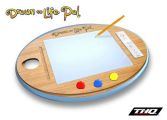
Initial concept art of the uDraw GameTablet by Daniel McGuffey, titled Drawn to Life Pal during development.

Updated mockup of the Drawn to Life Pal, with a closer resemblence to the final uDraw GameTablet design.
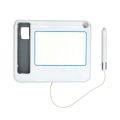
The uDraw GameTablet, released in 2010.

The upgraded uDraw, released in 2011.


| Nintendo DS | 5th Cell • THQ • Agatsuma Entertainment |
|---|---|
| iOS | 505 Games • WayForward |
|
| |
| Altron • Nickelodeon • THQ | |
|
| |
| Planet Moon Studios • THQ | |
| 5th Cell • THQ | |
| Most Regions | 505 Games • Digital Continue |
| South Korean Release | H2 Interactive |
Directory: Drawn to Life → THQ | |
| Nintendo DS | 5th Cell • THQ • Agatsuma Entertainment |
|---|---|
| iOS | 505 Games • WayForward |
|
| |
| Altron • Nickelodeon • THQ | |
|
| |
| Planet Moon Studios • THQ | |
| 5th Cell • THQ | |
| Most Regions | 505 Games • Digital Continue |
| South Korean Release | H2 Interactive |
Directory: Drawn to Life: SpongeBob SquarePants Edition → THQ | |
| Nintendo DS | 5th Cell • THQ • Agatsuma Entertainment |
|---|---|
| iOS | 505 Games • WayForward |
|
| |
| Altron • Nickelodeon • THQ | |
|
| |
| Planet Moon Studios • THQ | |
| 5th Cell • THQ | |
| Most Regions | 505 Games • Digital Continue |
| South Korean Release | H2 Interactive |
Directory: Drawn to Life: The Next Chapter (DS) → THQ | |
| Nintendo DS | 5th Cell • THQ • Agatsuma Entertainment |
|---|---|
| iOS | 505 Games • WayForward |
|
| |
| Altron • Nickelodeon • THQ | |
|
| |
| Planet Moon Studios • THQ | |
| 5th Cell • THQ | |
| Most Regions | 505 Games • Digital Continue |
| South Korean Release | H2 Interactive |
Directory: Drawn to Life: The Next Chapter (Wii) → THQ | |
 References[edit]

- ↑ The Drawn to Life Fanbase Interviews Jeremiah Slaczka, 1:00:54
- ↑ Fountain of Scribbles: 5th Cell's Jeremiah Slaczka Speaks, GameSpot
- ↑ Scott Rogers, Linkedin
- ↑ THQ's uDraw Disaster, Eurogamer
- ↑ Drawn to Life series acquired bt 505 Games, Polygon
- ↑ US Patent and Trademark Office, Drawn to Life (THQ)
